




By Sriram Kannan, Founder & CEO, Routematic
India’s urban congestion problem is often discussed as a civic failure, but for enterprises it increasingly looks like a systems and data problem. Large organisations collectively lose millions of productive hours every year to inefficient commuting, fragmented transport operations, and static scheduling models. As enterprises digitise everything from finance to workforce planning, employee commute remains one of the last large operational challenges which still largely run on manual logic and legacy thinking.
That is now changing. Corporate transport is undergoing the same shift seen earlier in ERP, HR tech, and supply-chain software, from execution-focused tools to intelligence-driven platforms. The result is a move away from traditional fleet management towards AI enabled mobility intelligence.
The Technology Limits of Traditional Fleet Management
Traditional fleet management systems were designed for a simpler era. They track vehicles, record trips, and enforce compliance rules. Their architecture assumes stable demand, fixed routes, and predictable schedules. In today’s environment defined by hybrid work, variable attendance, night shifts, and distributed offices, those assumptions no longer hold.
From a technology standpoint, these systems suffer from three fundamental constraints. Firstly, they are rule-based rather than data-adaptive. Routes are configured manually and updated infrequently. Secondly, they operate in silos, disconnected from attendance systems, access control, or real-time traffic intelligence. And thirdly, they generate reports after events occur, offering visibility but not foresight.
As a result, enterprises experience inefficiencies that technology leaders have increasingly recognised as solvable through better system design: underutilised vehicles, duplicated routes, inflated fleet sizes, and delayed response to safety risks.
AI as an Orchestration Layer
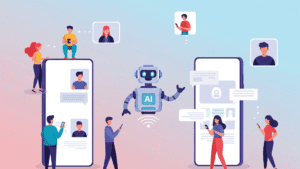
Artificial intelligence introduces a structural shift. Instead of managing transport assets, AI-enabled platforms orchestrate movement as a dynamic system.
At the core of mobility intelligence are machine-learning models that ingest multiple data streams; employee attendance, shift rosters, historical travel patterns, live traffic feeds, weather conditions, and vehicle telemetry. These systems continuously recompute optimal routes, vehicle allocation, and pickup sequencing. Routes are no longer fixed artefacts but outputs of algorithms that evolve daily, sometimes hourly.
Predictive analytics replaces assumption-based planning. Demand is forecast rather than guessed. Peak loads are anticipated before they materialise. Exceptions are detected algorithmically instead of being escalated manually. In technical terms, mobility becomes a real-time optimisation problem, not a scheduling exercise.
This transition mirrors what enterprises have already seen elsewhere. Finance moved from transactional accounting to predictive forecasting. HR shifted from static records to workforce analytics. Mobility is now following the same trajectory, from operational tooling to intelligence infrastructure.
Commute Data as Enterprise Signal
Once mobility is treated as a data system, its strategic relevance expands.
From an employee experience perspective, AI-led routing reduces travel time variance, improves predictability, and personalises commute patterns. These outcomes are not driven by better drivers or bigger fleets, but by better models and faster feedback loops.
From a safety standpoint, real-time data enables continuous risk assessment. Deviations from expected routes, prolonged stoppages, or unusual travel patterns can trigger automated alerts and escalation protocols. Safety shifts from reactive intervention to algorithmic prevention.
From a sustainability perspective, commute intelligence produces granular emissions data. Distance travelled, occupancy rates, fuel types, and route efficiency can be measured precisely. This turns employee commuting, often one of the most under leveraged contributors to Scope 3 emissions, into a measurable and optimisable variable.
In all three cases, the value lies not in commute itself, but in the large data pool it generates and the decisions that data enables.
Economic Impact of Optimisation
The most immediate business impact of mobility intelligence is economic.
When demand forecasting improves and routes are continuously optimised, enterprises can operate with fewer vehicles while maintaining or improving service levels. Utilisation increases. Redundancy decreases. Transport costs become elastic rather than fixed.
More importantly, commute data starts influencing upstream decisions. Office location planning, shift design, hybrid work policies, and campus expansion strategies can all be informed by movement analytics. Mobility stops being a downstream service and becomes an input into enterprise planning systems.
Why India Is a Critical Testbed
India’s urban environment presents extreme complexity for mobility systems. High-density cities, unpredictable traffic conditions, diverse workforce schedules, and rapid enterprise scaling create scenarios where static models break quickly.
From a technology lens, this makes India a stress test for mobility intelligence platforms. Systems that can handle this level of variability, absorbing noise, scale, and uncertainty, are inherently resilient. They rely less on rigid rules and more on adaptive algorithms, making them suitable for other emerging and high-density markets globally.
The Next Phase of Enterprise Mobility
As enterprises adopt more automation across physical operations, mobility will increasingly intersect with smart infrastructure, digital public platforms, and autonomous decision systems. But the most important shift is already underway.
Corporate commute is no longer only about moving people efficiently. It is about processing movement as data. Enterprises that continue to rely on old age traditional fleet management will face rising costs, limited visibility, and mounting compliance risk. Those that invest in intelligent AI enabled employee commute platforms will gain not just operational efficiency, but a new layer of enterprise insight, building stronger employer brands. In the AI era, employee movement is no longer a logistical detail. It is a computational problem and a strategic one.
About The Author
Sriram Kanan is the visionary founder and CEO of Routematic, India’s leading AI-enabled corporate commute automation and fleet management platform. With a passion for innovation and a relentless commitment to improving urban mobility, Sriram has emerged as a dynamic leader in the transportation technology sector. At Routematic, he has been responsible for driving key innovations for the organization in the areas of route planning, travel time estimation, IoT tracking and big data analytics. He also delves into research around the application of advanced deep learning concepts for traditionally ‘rule based’ aspects of driver behaviour modeling, route planning & logistics. Owing to his proficiency in a prolific career spanning over two decades, Sriram is considered a Subject-Matter Expert in the mobile security architecture and embedded hardware/ firmware co-design and algorithms design realms. He has authored multiple papers and presented in various international forums. Sriram began his career as a design engineer at Texas Instruments (TI) working on advanced wireless and embedded systems, building deep expertise in chipset technologies, firmware development, and mobile security. Early in his career, he played a key role in driving hardware-based security innovations for mobile platforms and led the launch of a pioneering secure computing framework for cryptographic applications. Sriram also served as the Chief Innovation Officer at i2i TeleSolutions, where he was instrumental in launching the world’s first ever tele-medicine application on touch phones. His work in innovation has earned him multiple recognitions, including being named to the prestigious Massachusetts Institute of Technology (MIT-TR35) list of Indian Innovators under the age of 35 in 2010.
About Routematic
Routematic is a pioneering AI-powered urban mobility solution designed for daily office commutes, dedicated to enhancing the transportation experiences of companies managing round-the-clock employee shifts. Currently present in 24+ cities across India, servicing 400+ leading enterprises and 350K+ monthly users, Routematic’s vision is to create accessible, safe, reliable, comfortable, and affordable daily commuting options for every member of the workforce, all while contributing to the reduction of the global carbon footprint. Routematic solutions portfolio offers a holistic range of offerings for Corporate Mobility Technology, Transport as a Service (TaaS) offering that covers end to end fulfilment using Routematic Fleet as well as Managing transport operations. Routematic’s proprietary AI-powered technology dynamically optimises routes, intelligent scheduling, real-time vehicle tracking and alerts, live updates, and robust predictive analytics for anticipating traffic patterns and making informed data-driven decisions for reducing employee commute time, higher vehicle utilisation, improved punctuality, and lower operational costs for enterprises. In May 2025, Routematic secured $40 million in Series C funding from Fullerton Carbon Action Fund and Shift4Good, accelerating its mission to redefine corporate mobility and expand its impact on a global scale. By integrating electric vehicles into its fleet, Routematic is aligning its operations with India’s green mobility goals, helping businesses transition to sustainable and cost-effective transport solutions. In 2025 alone, Routematic helped save over 8300 tonnes of CO₂ emissions through AI-Optimised, EV-Enabled, Shared Corporate Commute Solutions.
Disclaimer
The guest contribution purely reflects the opinions and views of the author. Techarc may or may not agree to these individual views.