





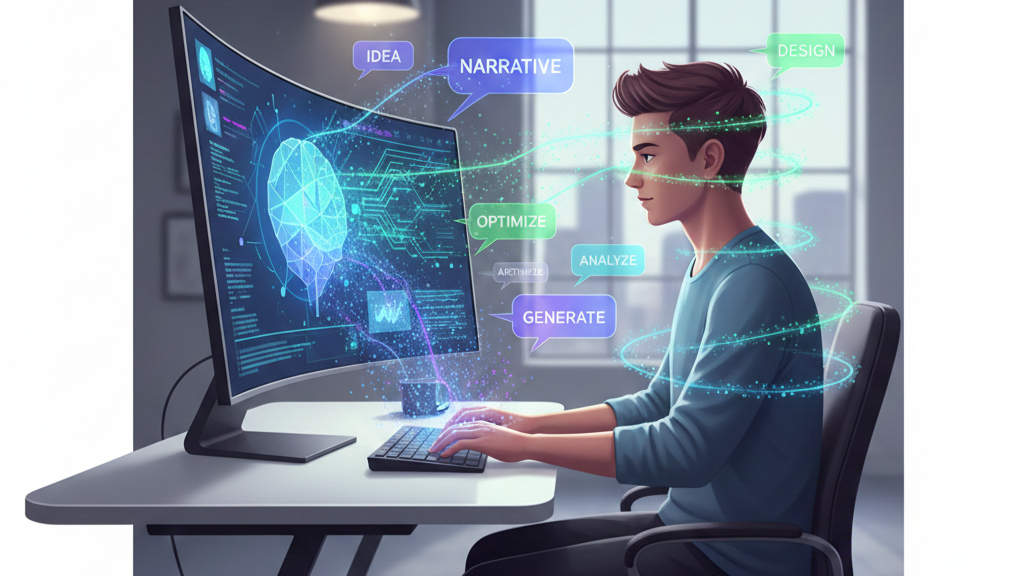
Not long ago, content creation meant staring at a blank screen, rewriting the same sentence five times, and convincing yourself that “draft one is supposed to be bad.” Today, many creators begin with a different ritual: opening an AI tool and asking it to help them get started.
From editing and writing to social media outreach and translations, AI has quietly become a co-creator. Its involvement has increased across almost every stage of the content lifecycle—and the impact is undeniable. Content is being produced faster, in more formats, and for wider audiences than ever before.
But as with any major shift, this growth has come with both applause and pushback. Let’s explore how AI is reshaping content creation, why people love it, and why platforms and creators are still arguing about where to draw the line.
The Rise of AI as the “Always-On” Creative Assistant
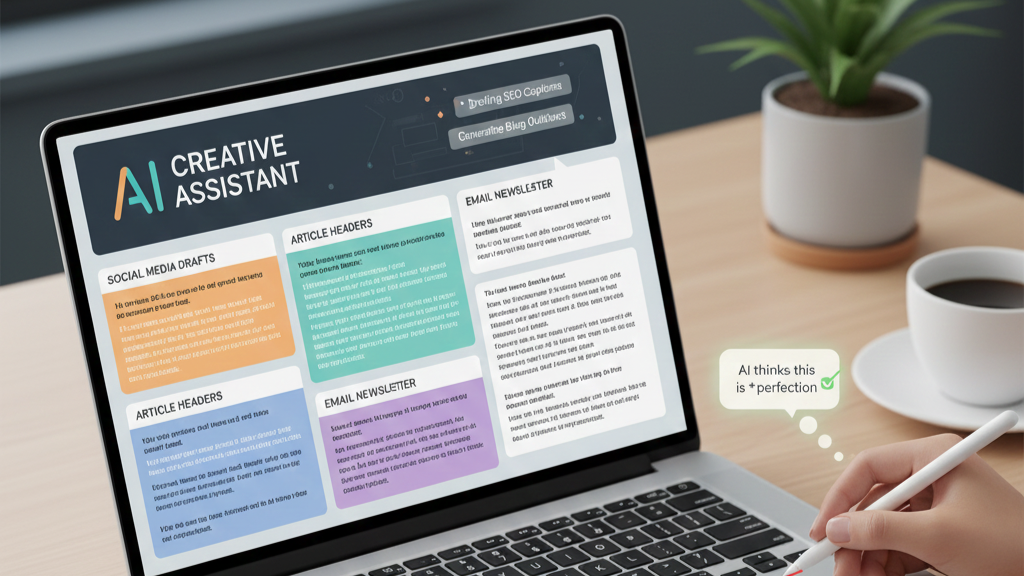
AI didn’t replace content creators overnight—it slipped in politely and offered help. It started with grammar checks, moved on to summaries, and then expanded into captions, scripts, outlines, hooks, hashtags, and eventually full drafts.
Editing, writing, and social outreach are particularly suited to AI because they rely heavily on patterns. AI excels at rephrasing text for clarity or tone, generating multiple content variations in a short time, optimising content for different platforms, and maintaining consistency across large volumes of posts.
For creators, this shift has been transformative. Tasks that once took days can now be completed in hours. Teams that previously required multiple editors can scale output with fewer people, while solo creators are able to publish at the pace of small media houses.
The result is a faster content engine—one that rarely sleeps, never complains, and doesn’t ask for coffee breaks, although it does occasionally hallucinate facts.
Speed, Scale, and Variety: The Big Wins of AI Content
One of the most visible benefits of AI involvement is the sheer volume and variety of content now being produced. A single idea can be expanded into a long-form blog, condensed into a short reel, and reshaped into social media posts without starting from scratch.
Creators can repurpose content across platforms effortlessly and experiment with different tones—formal, casual, humorous, or dramatic—without rewriting everything manually. This has significantly lowered the barrier to entry. People who once struggled with writing or editing are now able to express ideas clearly, while businesses that avoided content marketing due to cost or complexity can participate meaningfully.
AI has also improved accessibility. Translation tools allow content to reach global audiences, subtitles and summaries make information easier to consume, and simplified language helps content resonate beyond niche or expert groups.
The outcome has largely been positive. More content is being consumed, shared, and discussed. For many users, AI-assisted content doesn’t feel artificial—it feels efficient. After all, if the message is useful, most people don’t stop to ask whether a human typed every word.
The Growing Audience—and Why It’s Responding Well
Consumption patterns suggest that audiences are not rejecting AI-assisted content. In fact, engagement continues to grow. Content is appearing more frequently, topics are explained more clearly, and formats are increasingly aligned with how people actually consume media.
AI helps creators meet audiences where they are. A single idea can become a blog, a carousel, a short video script, and a newsletter, each optimised for its platform and audience behavior. This flexibility has made content ecosystems richer and more inclusive.
Educational content, niche explainers, and even creative writing are reaching audiences that previously felt excluded due to language barriers or complexity. Interestingly, AI hasn’t removed the human element—it has amplified it. Creators now spend less time struggling with syntax and formatting and more time shaping ideas, narratives, and opinions.
However, this honeymoon phase has not been without complications.
The Pushback: Monetisation, Originality, and Trust Issues
As AI-generated content increased, platforms took notice—and not all responses were positive. YouTube’s stance on monetisation for heavily AI-generated or repetitive content has sparked widespread debate. The concern isn’t AI itself, but low-effort mass production that floods platforms with near-identical material.
There are growing worries about declining originality and creative voice, spam-like content created purely for reach, and the increasing difficulty of distinguishing genuine expertise from automated output. Trust has become a central issue. Audiences expect authenticity, and when content feels generic or emotionally hollow, engagement drops—even if the production quality is high.
For creators, monetisation policies have introduced uncertainty. Questions around how much AI usage is acceptable remain largely unanswered. Is AI-assisted editing fine but scripting risky? What about AI-generated voices, images, or translations?
Because these rules are still evolving, many creators feel as though they’re playing a game where the goalposts shift mid-match.
Finding the Balance: AI as a Tool, Not the Talent
The future of content creation is not a battle between AI and humans—it’s a collaboration. AI works best when it acts as a drafting partner rather than the final author, a productivity booster rather than a creative replacement, and a translator of ideas rather than the source of meaning.
The creators who thrive will be those who combine AI’s efficiency with human judgment, context, and emotion. Audiences still value perspective, lived experience, humour, and originality—qualities AI can support but not truly originate.
Platforms are also likely to evolve. Instead of focusing on whether content was created with AI, the emphasis may shift toward whether the content provides real value. High-quality, thoughtful work will always have a place, regardless of the tools used to produce it.
In the end, AI hasn’t killed creativity. It has simply revealed a familiar truth: tools change, but storytelling still belongs to humans. AI may help write the sentence, but the idea behind it is still yours.
And if AI helps you publish faster, reach further, and sleep better—while keeping your voice intact—that sounds less like a threat and more like progress.