





In a market segment where consumer preference has largely shifted away from traditional tablets, OnePlus is not merely participating; it is attempting to dominate. While the Pad 2 offered a strong value proposition, the OnePlus Pad 3 positions itself as a calculated competitor to industry titans like the iPad Pro and Galaxy Tab S10 Ultra. It challenges the notion that “laptop-grade” performance requires laptop-tier pricing.
1. Display: redefining LCD Capabilities
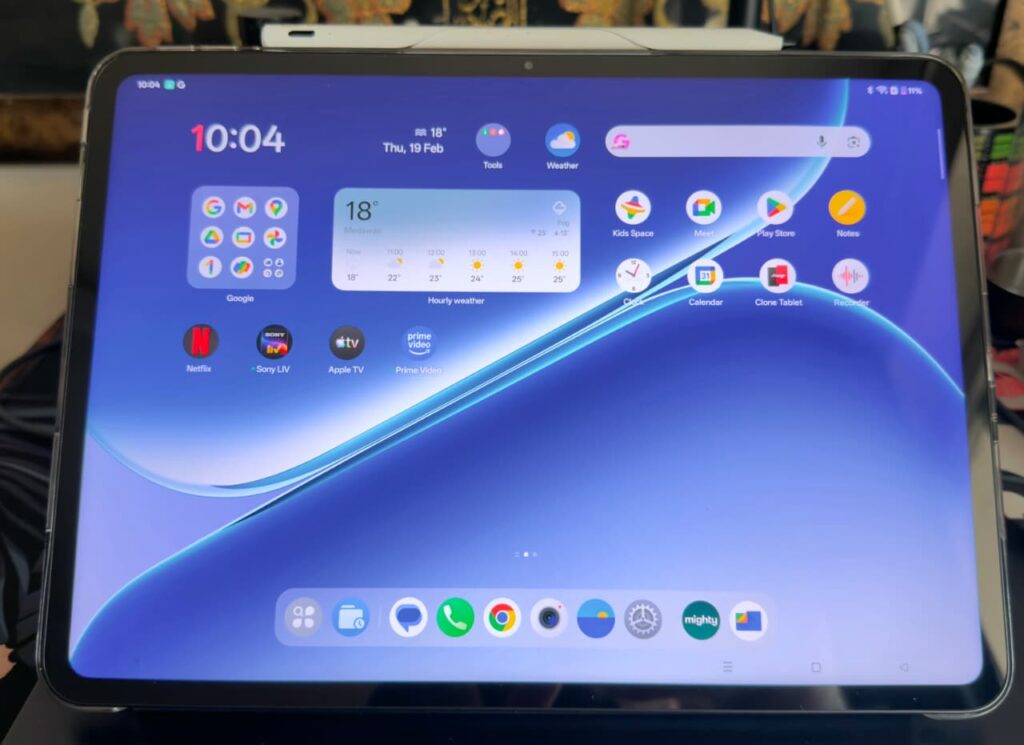
While the industry standard for flagship tablets has shifted toward OLED, the OnePlus Pad 3 utilizes an IPS LCD panel that arguably sets a new benchmark for the technology.
Visual Fidelity: The device features a 3.4K resolution (315 PPI) paired with 12-bit color depth, delivering a visual experience that rivals organic LED panels in vibrancy.
Color Accuracy: Technical assessment reveals a Delta E of approximately 0.7. This level of calibration places the display within professional monitor territory, making it a viable tool for photo editors requiring color fidelity in software like Lightroom.
Aspect Ratio Utility: Departing from the standard 16:10 or 4:3 ratios, the 7:5 aspect ratio offers a “Goldilocks” solution. It mimics the dimensions of standard A4 paper, providing optimized vertical screen real estate for coding, document review, and split-screen productivity.
2. Performance Architecture: The Snapdragon 8 Elite
The integration of the Snapdragon 8 Elite processor provides the Pad 3 with a significant performance overhead, surpassing current software demands.
Thermal Management & Gaming: Stress testing with graphically intensive titles such as Genshin Impact and Zenless Zone Zero demonstrates the effectiveness of the 34,857mm² vapor chamber. The device maintains roughly 99.9% GPU stability under sustained loads, avoiding the thermal throttling and screen dimming often observed in competitor devices.
Multitasking Efficiency: The 16GB LPDDR5T RAM, combined with OxygenOS 15’s Open Canvas, enables a desktop-class workflow. Users can operate up to three split apps and two floating windows simultaneously. The system handles transitions between resource-heavy applications such as 4K video editing and large-scale spreadsheets without reloading background processes.
3. Audio Engineering: Portable Immersion
The audio architecture distinguishes the Pad 3 from typical slate form factors. Equipped with an 8-speaker system (4 woofers and 4 tweeters), the device delivers a robust sound profile. Comparative analysis against the iPad Pro M4 suggests the Pad 3 offers a wider soundstage and superior low-end frequency response, capable of filling a medium-sized room without external amplification.
4. Ecosystem & Peripherals: The Laptop-Lite Proposition
The accessory suite transforms the hardware from a consumption device into a production tool.
Stylo 2: The stylus features a haptic motor that simulates the friction of pencil on paper. With 16,000 levels of pressure sensitivity, it meets the requirements of professional digital artists.
Detachable Keyboard: The magnetic keyboard allows for decoupled typing via Bluetooth. This flexibility enables users to elevate the screen for ergonomic viewing while maintaining a tactile typing interface, ideal for constrained environments.
O+ Connect: This feature facilitates seamless integration with other hardware, including remote control capabilities for Mac, addressing a critical gap in cross-platform ecosystem utility.
5. High-Quality Functional Design
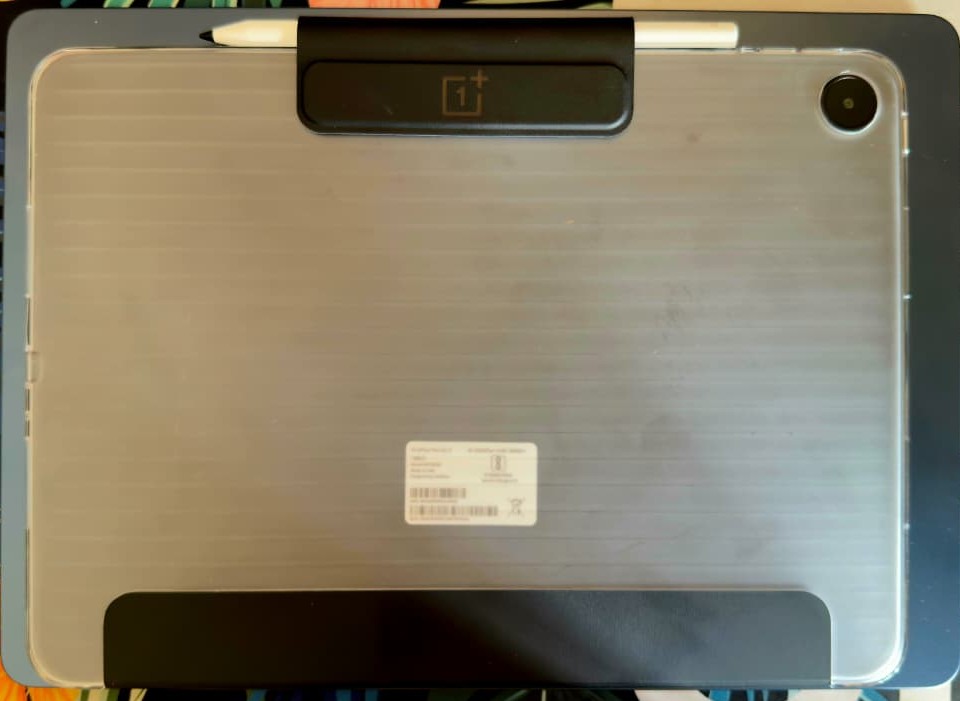
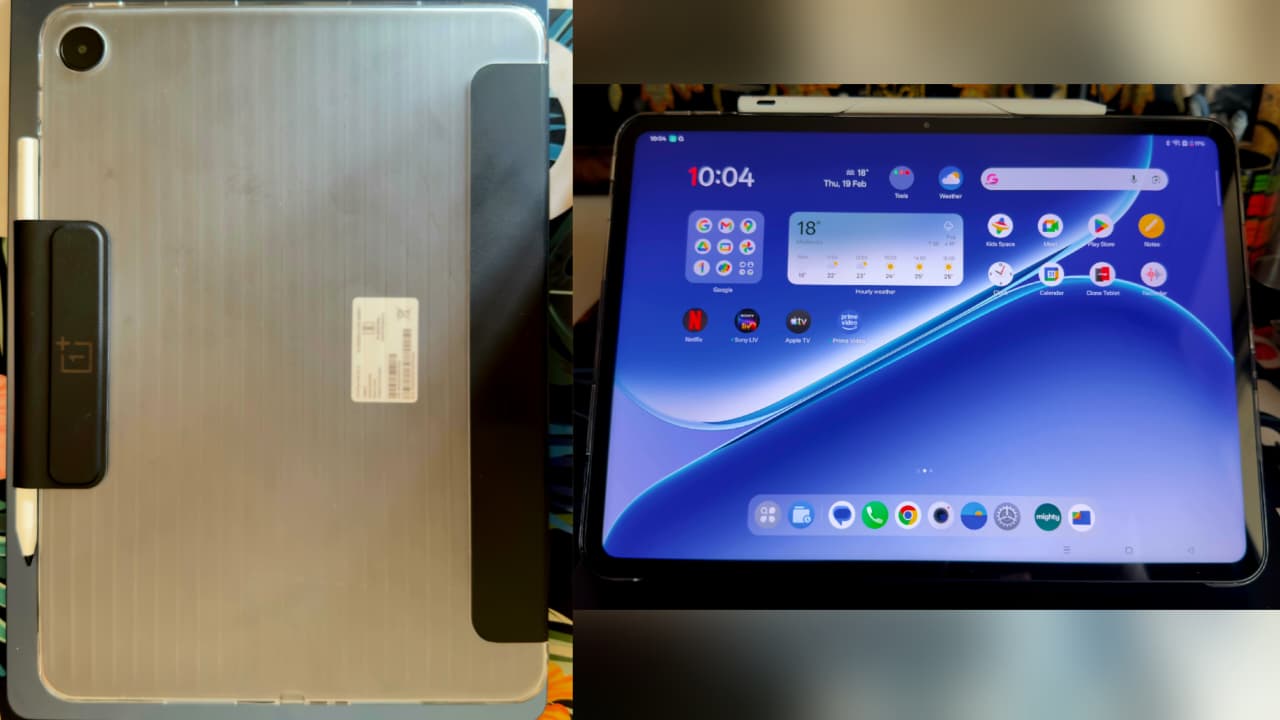
The included folio case is a standout accessory. It is crafted from premium plastic that feels sturdy and durable, rather than cheap. Its design is highly functional, offering a firm base that allows the tablet to be used comfortably in tabletop mode, similar to a laptop setup.
6. Stylus Ergonomics & Storage (Negative)

A notable design oversight is the lack of a magnetic attachment for the stylus. While the case includes a dedicated placeholder slot that holds the pen firmly, the absence of a magnetic snapping mechanism on the device itself feels like a missed opportunity for convenience and ease of use.
| Feature | OnePlus Pad 3 | iPad Pro M4 (13″) | Galaxy Tab S10 Ultra |
| Display | 13.2″ LCD (144Hz) | 13″ Tandem OLED (120Hz) | 14.6″ AMOLED (120Hz) |
| Processor | Snapdragon 8 Elite | Apple M4 | Dimensity 9300+ |
| Battery | 12,140 mAh | 10,200 mAh | 11,200 mAh |
| Charging | 80W (Included) | 30W (Not included) | 45W (Not included) |
| Est. Price | ₹47,999 | ₹2,29,000 | ₹86,990 |
Final Verdict
The OnePlus Pad 3 represents a strategic usurpation of the premium tablet market. By delivering flagship-grade performance at nearly 20% of the cost of the iPad Pro M4 and 55% of the cost of the Galaxy Tab S10 Ultra, OnePlus has effectively invalidated the premium pricing structure of its competitors.
While industry titans rely on brand heritage and incremental OLED upgrades to justify six-figure price tags, the Pad 3 focuses on pragmatic dominance. It matches or exceeds competitors in critical metrics, processing power (Snapdragon 8 Elite), charging speed (80W vs. 30W/45W), and sustained performance while making intelligent compromises in display technology that are virtually imperceptible to the average user.