


Processor brands that are responsible for the smartphone experiences of users are likely to meet the expectations better
1. How laptop preferences and user behaviour are changing
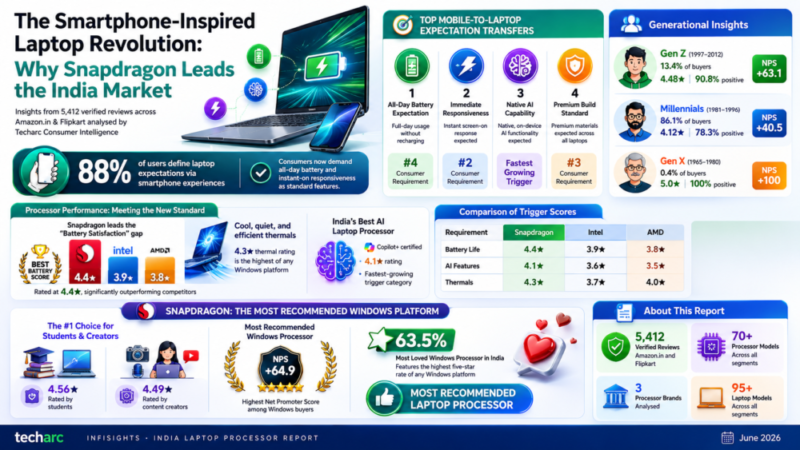
The smartphone has, for over a decade, been the device that defines what “good” feels like for the average consumer, always on, always connected, lasting the day, and premium in hand. That conditioning does not switch off when the same consumer shops for a laptop. In a quick poll, 88% of the respondents agreed that their expectations from a laptop were defined by their experiences from the smartphones. The smartphone has quietly become the reference point against which laptops are now judged, and three shifts stand out.
Wireless network to cord-free power
Wi-Fi long ago freed the laptop from the network cable. The expectation has moved to the next cord: the charger. Buyers increasingly want genuine all-day endurance, instant resume, and the freedom to work without hunting for a power socket. “All-day” and “unplugged” have moved from differentiators to baseline expectations.
Anytime, anywhere usage
The phone works everywhere, and buyers now want a laptop that behaves the same way, light enough to carry all day, ready the instant the lid opens, and dependable on the move. Portability and instant readiness over raw specification signal a shift from a desk-bound tool to an always-available companion device. Be it home or workplace, users want to use a laptop anywhere they want.
Premium build as a default expectation
Flagship smartphones established metal as the marker of quality, and laptop buyers now apply the same yardstick, considering plastic body inferior and appreciating thin aluminium designs. Importantly, this is as much an engineering expectation as an aesthetic one. Thin metal bodies are achievable only if thermals are well managed and efficient.
The common thread: Each of these shifts, longer unplugged life, anytime-anywhere readiness, and premium thin-and-light design, is shaped heavily by the processor. The component sets the ceiling on endurance, thermals and responsiveness, which makes processor performance central to how well a laptop meets the next generation buyer’s expectations.
2. How processors are enabling and meeting these expectations
To understand how well the market is meeting these expectations, Techarc’s InfiSights analysed 5,000 plus verified reviews of laptops on leading marketplaces like Amazon.in and Flipkart, scoring each on the attributes consumers actually discuss. The analysis focuses on attributes having a direct relationship with processor performance, battery endurance, thermals, the aluminium build those thermals enable, on-device AI, responsiveness and connectivity, so that the comparison reflects what the silicon contributes rather than factors beyond.
Endurance: the attribute with the widest spread
Battery is where the smartphone-shaped buyer is most demanding, and it is also where platforms separate most. Across the dataset, battery satisfaction shows the single largest and most consistent variance of any measured attribute, a sign that endurance is both the expectation buyers prize most and the area where laptop processor platforms differ most sharply.
Thermals as the enabler of premium design
The aluminium-build expectation rests on a cool-running platform. The data confirms the relationship: thermal satisfaction and perceived build quality move together, and platforms that score well on heat management also earn higher marks for design and form factor. Cooler silicon is what makes the thin metal design buyers want commercially viable.
On-device AI: the fastest-emerging attribute
AI is the newest entrant in consumer expectations and the fastest-growing attribute category. While it can still be considered a niche factor, the satisfaction with on-device AI experiences is already a visible differentiator between processor platforms. It is an early signal of where the next phase of competition will play out.
3. Benchmarking the processor platforms
The analysis measured on the processor-correlated attributes above, the three processor platforms, Intel, AMD and Snapdragon, which perform differently across the board. The scorecard below shows the average consumer rating (1–5★) for each attribute, with the leading score on each row highlighted.
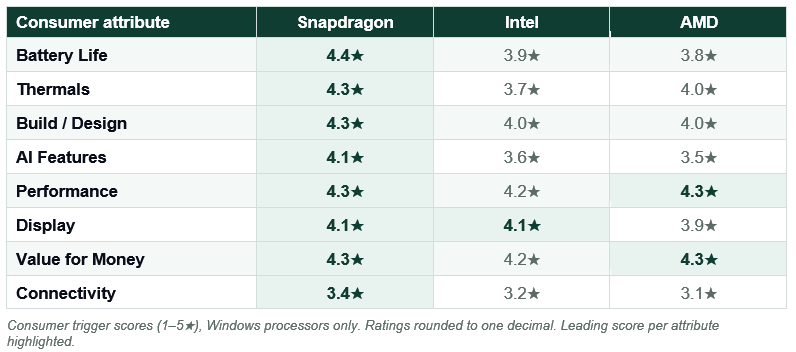
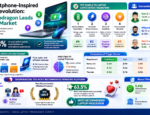
The benchmarking reveals a clear division of strengths. Snapdragon leads on the experience attributes most tied to the new buyer expectations, battery (4.4★ vs 3.9★/3.8★), thermals (4.3★ vs 3.7★/4.0★), build (4.3★) and AI (4.1★ vs 3.6★/3.5★), leading on seven of the eight measured attributes. AMD holds a narrow edge on value-for-money and remains strong in gaming-oriented performance, while Intel benefits from the broadest installed presence and remains competitive on performance and display. The platforms are closely matched on raw performance and display. However, they diverge most on endurance, thermals and AI.
Advocacy: how strongly buyers recommend their choice
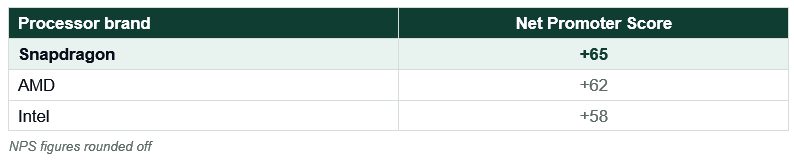
Net Promoter Score, the share of buyers who would actively recommend their laptop, mirrors the attribute pattern. All three platforms sit in healthy positive territory, with Snapdragon ahead, followed by AMD and Intel.
The Techarc view — a forward look
The future direction is clear. The attributes the smartphone-shaped buyer prioritises, unplugged endurance, cool premium design, instant readiness and on-device intelligence, are moving from the margins of the purchase decision to its centre. As this buyer (next generation laptop buyer) becomes the mainstream laptop buyer, the parameters on which laptops compete are shifting away from raw specifications toward sustained, real-world experience.
On the evidence of this study, platforms architected for efficiency are best positioned for that shift. Today, Snapdragon leads the laptop experiences on exactly the attributes gaining importance: battery endurance, efficient thermals, premium build and AI, which suggests an architectural advantage that aligns with where demand is heading. At the same time, AMD’s value strength and Intel’s installed scale mean the competition will remain genuine.
Techarc’s take
The laptop is being re-evaluated through a smartphone lens, and the processor is the component that decides how well a device meets the new expectations. The brands that win the next cycle will be those that turn efficiency, endurance, thermals and on-device AI into a visible, everyday consumer experience. A mobile first market looking for laptop next experience.
About this analysis
Techarc InfiSights analysed 5,000 plus verified consumer reviews of laptops powered by Intel, AMD and Snapdragon processors, sourced from leading marketplaces including Amazon and Flipkart. The dataset spanned 95+ laptop models and 70+ processor variants (India, May 2026). Reviews were scored on consumer-trigger attributes; the report focuses on attributes with a direct relationship to processor performance. Ratings are on a 1–5 star scale, rounded to one decimal. NPS uses the commercial formula (4–5★ Promoter, 3★ Passive, 1–2★ Detractor).